Color Block Run - Puzzle Game
- 4.9
- Rating
- 1.00M
- Installs
- Free
- Price
 Analysis by App-foxy
I spent time with Color Block Run as a compact puzzle game built around matching colors and keeping your attention on the next move. It is easy to understand within moments, yet the simple presentation gives it room to work as both a quick break and a more deliberate mental exercise. I found myself opening it when I wanted something active enough to hold my focus but not so demanding that I needed a long uninterrupted session.
That balance is the main reason I can imagine recommending it to a friend. Play2Ever Games has aimed this release at people who enjoy visual sorting, quick decisions, and the small satisfaction of clearing a pattern correctly. It is free to start, rated for Everyone, and listed as a puzzle game rather than a story-driven adventure or a competitive multiplayer experience. Those details matter because they set the right expectation: this is a focused color-matching pastime, not a large game with a long narrative to discover.
How the color-matching loop feels in everyday play
The first thing I noticed is how quickly the game gets out of the way. A color-based puzzle does not need a lengthy explanation, and that makes it suitable for the kind of moment when I have only a few minutes. I can pick it up during a short pause, play until my attention is needed elsewhere, and return later without having to remember a complicated plot or a large set of controls.
You May Also Like

 Blood Strike: 2.5 Anniversary
Blood Strike’s Loadouts Turn Every Drop Into a Tactical Gamble
A close look at Blood Strike’s custom loadouts: how fast access to signature weapons reshapes its battle royale rhythm, rewards preparation, and narrows the gap between fights.

 Pandora - Music & Podcasts
Pandora’s Music Is Easy to Start, but Harder to Recover
Pandora’s strength is its low-effort path from a seed to a station. Its weak spot is how much confidence it asks you to place in connection, setup, and quiet recovery.

 8 Ball Pool
 Is Built on Rivalries, Rematches, and Routine
A close look at the rivalries, rematches, shared routines, and unanswered safety questions that turn a quick pool match into a persistent mobile community.

 Samsung Music
’s Quiet Strength Is Playing What You Already Own
Its reach comes less from spectacle than from dependable access to a personal library. That simplicity is both the app’s strongest retention engine and its ceiling.

 AccuWeather: Weather Radar
AccuWeather Review: A Quick, Clear Forecast for Everyday Decisions
For everyday plans, the best forecast is the one you can understand quickly. AccuWeather makes rain timing, radar, and local conditions easy to act on, with a few trade-offs.

 Hill Climb Racing
Why Hill Climb Racing Still Turns Crashes Into One More Run
A tiny car, a bumpy hill and one more upgrade: Hill Climb Racing keeps resurfacing because its simple chaos makes every near-miss feel personal.
More From Our News Desk



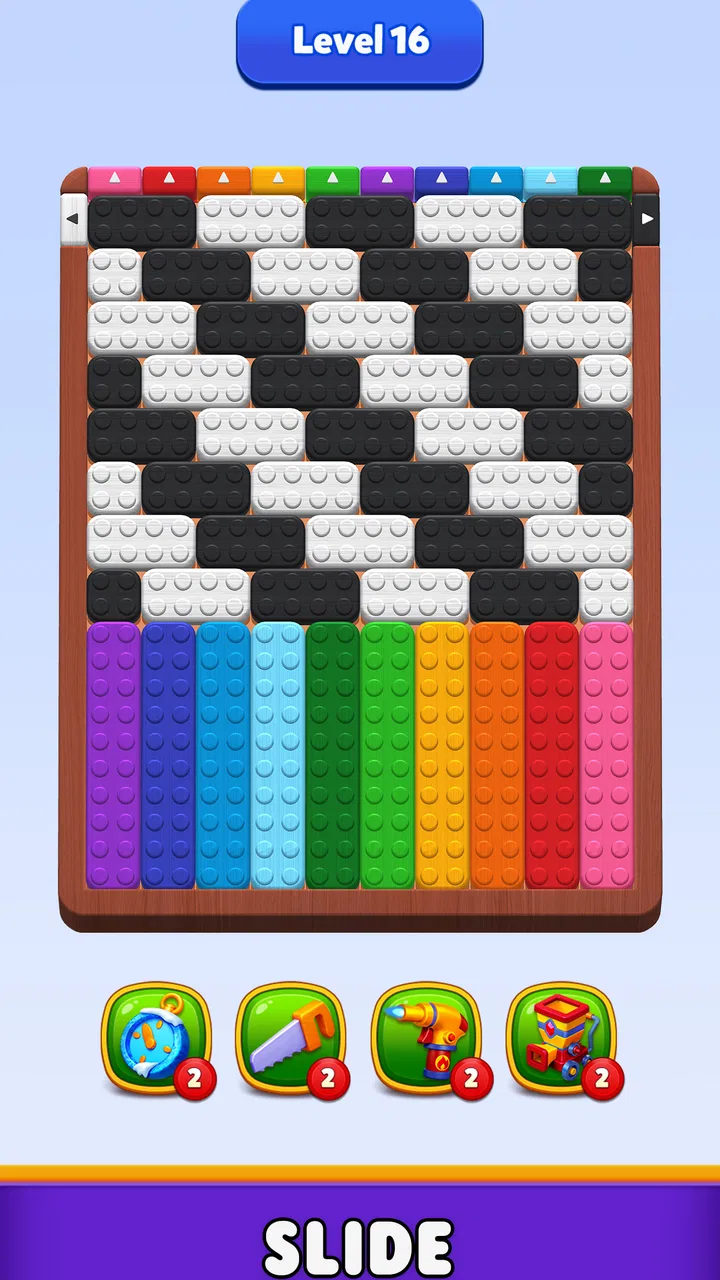
The appeal comes from the contrast between familiar rules and increasingly careful observation. Matching colors sounds effortless, but the moment several blocks compete for attention, I have to slow down and check what belongs together rather than moving on instinct. That creates a pleasant rhythm: quick recognition at first, followed by more cautious choices when the arrangement becomes less obvious.
I would describe the experience as calming when I play carefully and more challenging when I try to rush. That makes it flexible. Someone looking for a relaxing visual activity can treat each move as a small reset, while someone who enjoys testing concentration can use the same format as a light brain workout. The game does not need a complicated theme to create that difference; the tension comes from accuracy, timing, and the desire to finish a pattern cleanly.
One useful habit is to scan the entire board before making the first move. My instinct in color puzzles is to act on the most obvious match, but that can make the remaining arrangement harder to read. Taking a brief overview helps me spot groups that may be easier to resolve together and reduces the chance of creating an awkward final section. This is a small change, but it makes the game feel more thoughtful without turning it into a slow, formal puzzle session.
Why the short-session format works
The game fits naturally into short breaks because its core idea does not require preparation. I do not need headphones, a quiet room, or a large block of time to understand what I am doing. That makes it more practical than puzzle games that depend heavily on story progress, detailed tutorials, or a continuous chain of increasingly complex tasks.
It is also a good choice for someone who wants a screen activity that feels more intentional than endlessly scrolling. The color focus gives my eyes a clear target, and the matching objective gives each interaction a purpose. I still would not call it a replacement for a serious logic game, but it offers a gentler entry point for people who want to exercise attention without studying rules first.
There is a trade-off here. Players who need deep strategic variety may eventually want more than color recognition and arrangement decisions. The same accessible design that makes the game welcoming can make it feel lightweight to experienced puzzle fans. I think that is less a flaw than a question of fit: it works best when I want a clean, approachable challenge rather than a demanding system with many layers.
What I noticed during longer sessions
In a brief session, the simplicity feels refreshing. During a longer stretch, I become more aware of how much the enjoyment depends on the quality of the individual layouts and on my own willingness to keep concentrating. Repeating the same kind of visual task can become tiring if I am already mentally drained, especially when I stop appreciating the small decisions and start tapping automatically.
My solution is to use it in focused intervals instead of treating it as an all-evening game. A useful routine is to play a few rounds, pause when I catch myself making careless selections, and return only when I actually want another puzzle. This keeps the matching loop from becoming background noise and makes the satisfying moments stand out more.
Another practical tip is to increase the lighting around the phone rather than playing in a dark room. Color-based puzzles depend on comfortable visual separation, and eye strain can make a straightforward arrangement feel confusing. This is not a special setting inside the game; it is simply the kind of everyday adjustment that improves the experience when the screen is the main source of information.
Speed expectations and the feel of interaction
Color Block Run is designed around quick visual decisions, so perceived speed matters more here than in a turn-based word puzzle where a pause would be less noticeable. In my use, the most important part of responsiveness is that the interaction feels direct enough for the matching idea to remain clear. When a game asks me to identify a color and act, any hesitation between those two moments can make the result feel less satisfying.
I would approach it with moderate expectations rather than expecting the polish of a large, high-budget production. Its strength is the immediacy of the concept, not a huge presentation layer. On a device that handles ordinary casual games comfortably, the experience should make sense as a light, focused download. Older or heavily burdened phones may naturally feel less comfortable, particularly if many other apps are active at the same time.
A simple preparation step helps: close demanding apps before a longer play session and keep enough free storage for the phone to operate normally. I do not see a reason to treat this as a resource-heavy game, but casual does not mean every device behaves identically. Background activity, battery condition, and the age of the phone can all affect how responsive any game feels.
Heavy-use moments and practical trade-offs
The busiest moment for me is not necessarily when the board looks colorful. It is when I am trying to compare several similar-looking blocks while also planning the final few matches. That is where visual clarity and touch accuracy matter most. If I hurry, I can turn a manageable puzzle into a sequence of corrections, so the best performance habit is to separate recognition from action: look first, decide second, tap third.
Players who use a phone for navigation, calls, music, and gaming throughout the day should also think about battery habits. I did not treat this as a demanding three-dimensional title, but a bright screen and a long uninterrupted session can still consume more power than a short break. Playing while the phone is already low on charge is unlikely to be the best use case, especially if the device is needed for something important afterward.
In-app purchases range from ninety-nine cents to ninety-nine dollars and ninety-nine cents per item. That wide span is worth noticing before spending. The game is free to begin, but I would recommend deciding on a personal limit before exploring any optional purchases. Someone who only wants a casual color puzzle can simply keep the free experience as the starting point, while a more committed player should consider whether an extra purchase genuinely improves the way they play.
I also prefer not to make purchases impulsively after a difficult puzzle. Frustration can make any optional item seem more valuable than it is. My approach is to play without buying anything first, decide whether the core loop remains enjoyable after several sessions, and only then consider spending. That gives a clearer answer about whether the game itself is a good fit.
Reliability, interruptions, and returning to play
For a game like this, reliability is closely tied to how easily I can resume after an interruption. A short puzzle should fit around real life, so I value an experience that does not make me feel punished for putting the phone down. I tend to play in situations where a message, conversation, or task can interrupt me without warning, and that makes recovery part of the overall experience.
The safest expectation is to treat each play period as a self-contained activity and avoid assuming that every unfinished moment will be preserved exactly as I left it. That is a general precaution I use with mobile games, especially when switching between several apps. If a particular puzzle matters to me, I finish it before moving to another task rather than relying on the phone to retain every detail indefinitely.
Stability also depends on the device environment. Keeping the operating system reasonably maintained, avoiding an almost-full storage drive, and restarting a phone that has been running for a long time can reduce ordinary mobile friction. These are not special requirements for this title; they are sensible steps for any app that needs touch input and a responsive screen.
The release is listed as version 1.0.043, which suggests I should think of it as a relatively early version rather than a mature platform with years of accumulated systems. That does not make it a poor choice, but it does shape my expectations. I look for a straightforward casual experience first and judge it on whether the central puzzle loop is enjoyable, rather than expecting a deep ecosystem of established features.
Device limits and who should install it
The minimum operating system is Android 7.0, so compatibility begins with a fairly broad range of Android phones and tablets. That makes the game approachable for people who do not own a recent flagship. Still, operating-system compatibility is only the starting point. A phone with limited memory, an aging battery, or a crowded storage drive may provide a less comfortable experience than a newer device even when it meets the software requirement.
I would recommend it to casual puzzle players, commuters, students looking for a short mental break, and anyone who enjoys color sorting without wanting to learn a complicated rule set. It can also suit families because the content rating is Everyone, although younger players may still benefit from sensible limits around screen time and optional spending.
I would skip it if my main goal were a rich story, a competitive ranking environment, or a highly technical logic challenge. I would also choose a different puzzle game if I wanted wordplay, number solving, physics experiments, or a large collection of unrelated modes. This title is most convincing when its narrow focus is exactly what I want. Its restraint is a strength for some players and a limitation for others.
How it compares with familiar puzzle alternatives
Compared with word puzzles, the color-matching approach is more visual and asks less of my vocabulary. That makes it easier to enter when I am tired or when I do not want to think in language. Compared with number puzzles, it feels less analytical at the start, although careful planning still becomes important when the arrangement is crowded.
It also differs from physics-based puzzle games, which often depend on experimentation, motion, and surprising interactions. Here, the satisfaction comes from seeing relationships between colors and making a clean sequence of decisions. That makes it less playful in a physical sense but more predictable, which is useful when I want control rather than trial-and-error chaos.
Against large puzzle collections, its advantage is focus. I do not have to choose between many unrelated activities before starting. The disadvantage is that players who rely on constant novelty may find a single matching style less varied over time. My recommendation is simple: choose this one for a concentrated color challenge, and choose a broader collection when variety matters more than a consistent rhythm.
Audience, cost, and long-term value
The game is free, which lowers the barrier to trying it during a spare moment. Its audience is already substantial, with more than five hundred thousand installs, and the average score sits at about 4.9 from roughly 5,600 ratings. Those figures suggest that the basic idea connects strongly with many players, although a high average score should not replace personal testing. Puzzle preferences are unusually subjective, especially when one person enjoys repetition and another quickly needs new mechanics.
The release date, July 13, 2025, places it among newer mobile games, so I see its appeal in the freshness of a simple concept rather than in a long history. Play2Ever Games keeps the identity clear: a free puzzle title for quick color-focused play. I appreciate that clarity because it helps me decide quickly whether the game belongs on my phone.
My best use case is a short waiting period when I want to stay mentally engaged without committing to a full gaming session. I would not install it as my only puzzle game, but it earns a place beside more demanding options because it offers a different mood. When I want calm visual concentration, this is more suitable than a frantic action game or a complex strategy title.
My final performance verdict
After using it as a casual puzzle rather than forcing it into the role of a deep game, I came away with a positive impression. The color-matching loop is approachable, the sessions can fit around ordinary interruptions, and the visual focus gives the game a clear identity. Its perceived speed should be judged by the smoothness of simple decisions, not by the spectacle or complexity found in larger releases.
The main limitations are equally clear. Long sessions may feel repetitive, older or busy devices may not feel as comfortable as newer ones, and the optional purchase range deserves careful attention. Players seeking advanced strategy, a story, or broad variety will probably be happier elsewhere. Those are important boundaries, but they do not undermine the game’s purpose.
I would recommend Color Block Run to anyone who wants a free, Everyone-rated puzzle game that can turn a few spare minutes into a focused visual challenge. Start with short sessions, scan each arrangement before acting, and decide on a spending limit before considering in-app purchases. If that style of play sounds appealing, the game is an easy one to try; if you need constant novelty or deep systems, it is better viewed as a small companion to a more substantial puzzle collection.
FAQs for Color Block Run - Puzzle Game
01What is Color Block Run - Puzzle Game?
Color Block Run is an engaging puzzle game where players must strategically move and match colored blocks to clear levels. It's designed to challenge your logic and problem-solving skills while providing hours of entertainment. Perfect for casual gamers and those who enjoy puzzle-solving challenges.
02How do you play Color Block Run?
In Color Block Run, players navigate through levels by moving blocks to match colors and clear the path. The goal is to strategically align blocks of the same color to eliminate them from the board. As levels progress, challenges become more complex, requiring careful planning and quick thinking.
03Is Color Block Run free to play?
Yes, Color Block Run can be downloaded and played for free on both Android and iOS devices. However, the game may offer in-app purchases for additional features or to remove ads, enhancing the overall gaming experience for those interested in more customization or assistance.
04What are the system requirements for Color Block Run?
Color Block Run is designed to be compatible with most modern Android and iOS devices. It requires Android 5.0 or later and iOS 11.0 or later. The game is optimized to run smoothly on both smartphones and tablets, ensuring a seamless experience across devices.
05Does Color Block Run have multiplayer mode?
Currently, Color Block Run is a single-player game focused on individual puzzle-solving. While it does not feature a multiplayer mode, players can still enjoy competing with friends by comparing high scores and challenging each other to complete levels faster.
Pros
- Engaging and addictive gameplay.
- Simple controls for all ages.
- Vibrant and colorful graphics.
- Challenging levels increase difficulty.
- Offline play available.
Cons
- Ads can be intrusive.
- Limited level variety over time.
- No multiplayer mode available.
- In-app purchases are costly.
- Occasional performance lags.

Color Block Run - Puzzle Game
Gallery